
Saignant, à point or bien cuit
Team Faucher · updated on Thursday 19 November 2026
Saignant means the centre of your steak is still nicely red and the edge is cooked, at about 50 to 52 °C inside. À point is less red, towards pink, at around 60 °C. Bien cuit is cooked through, at around 70 °C. Bleu goes less far than saignant: seared and almost raw inside.
In the open kitchen every steak goes on the charcoal grill, and at the table you're asked how it should be cooked. Below is what those French words mean. Every fact links to its source.
What do bleu, saignant, à point and bien cuit mean?
Four levels of doneness, from almost raw to cooked through. The Flemish agency VLAM links each one to a core temperature, measured in the middle of the meat (VLAM).
| Doneness | Core temperature | What you see |
|---|---|---|
| Bleu | 47 °C | Seared, almost raw but warm inside |
| Saignant | 50 to 52 °C | The edge cooked, the centre nicely red |
| À point | 60 °C | The centre less red, towards pink |
| Bien cuit | 70 °C | No colour left, cooked through |
What exactly is saignant?
A steak with a red centre and a cooked edge. The Larousse dictionary describes saignant as meat cooked quickly whose flesh is still raw in the middle (Larousse). VLAM puts the limit at 50 to 52 °C in the core (VLAM).
The French meat industry is in the same range: 50 to 55 °C for saignant and 58 to 60 °C for à point, measured on a roast (Interbev). Saignant literally means bleeding. It sounds a lot more dramatic than what lands on your plate.
Is à point the same as medium?
Not quite: the French scale sits lower than the English one. For the Australian meat industry, rare starts at 60 °C, medium rare is 60 to 65 °C and medium is 65 to 70 °C (Australian Beef). So their rare is as warm as VLAM's à point.
“binnenin sappig en perfect gegaard (medium-rare, zoals gevraagd)”
Quebec's French language office writes that in France red meat is eaten one degree less cooked than in North America, and that a Paris à point is closer to their medium-rare (OQLF). A Dutch butcher simply translates à point as medium, at around 60 °C (Keurslager). In Belgium it's safest to order with the French word and not translate it.
What happens to meat as it cooks?
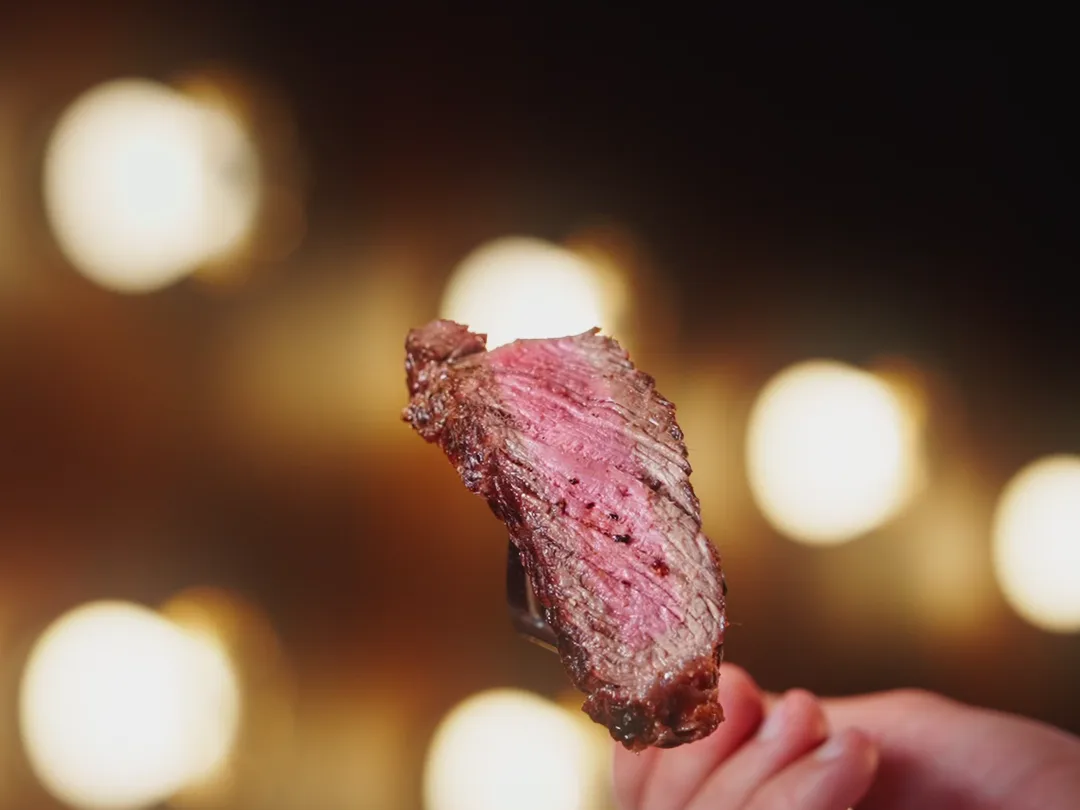
It loses juice and colour. Between 40 and 60 °C most proteins in the muscle juice clump together, and between 53 and 63 °C the collagen starts to shrink (Tornberg, 2005). That squeezes the juice out of the fibres (Yang et al., 2016).
The red pigment myoglobin changes mostly between 65 and 80 °C, which is why the centre turns greyer at higher temperatures (Yang et al., 2016). In the same study, steaks lost about 17 percent of their weight at 60 °C, against 25 to 26 percent at 82 °C. So a bien cuit isn't only greyer, it's also noticeably smaller.
Is it safe to eat a steak saignant?
Yes, a whole-cut steak can be red inside. On a whole cut, bacteria are only on the outside surface, so it can be served pink in the middle, says the UK Food Standards Agency (FSA). In mince or on a skewer they move inside, so that meat must be cooked through.
The Dutch Voedingscentrum puts it this way: a whole-cut steak can be eaten pink, but well done is the safest choice (Voedingscentrum). For pregnant women, young children, older people and people with lower resistance, it lists rare beef, tartare and carpaccio as risky products. Choosing bien cuit for them is a good reason, not a lack of taste.
Which doneness suits which steak?
There's no law, only experience. According to the French meat industry, an onglet shows all its flavour saignant, with just salt and pepper (Interbev). VLAM says bien cuit only suits thinner steaks (VLAM).
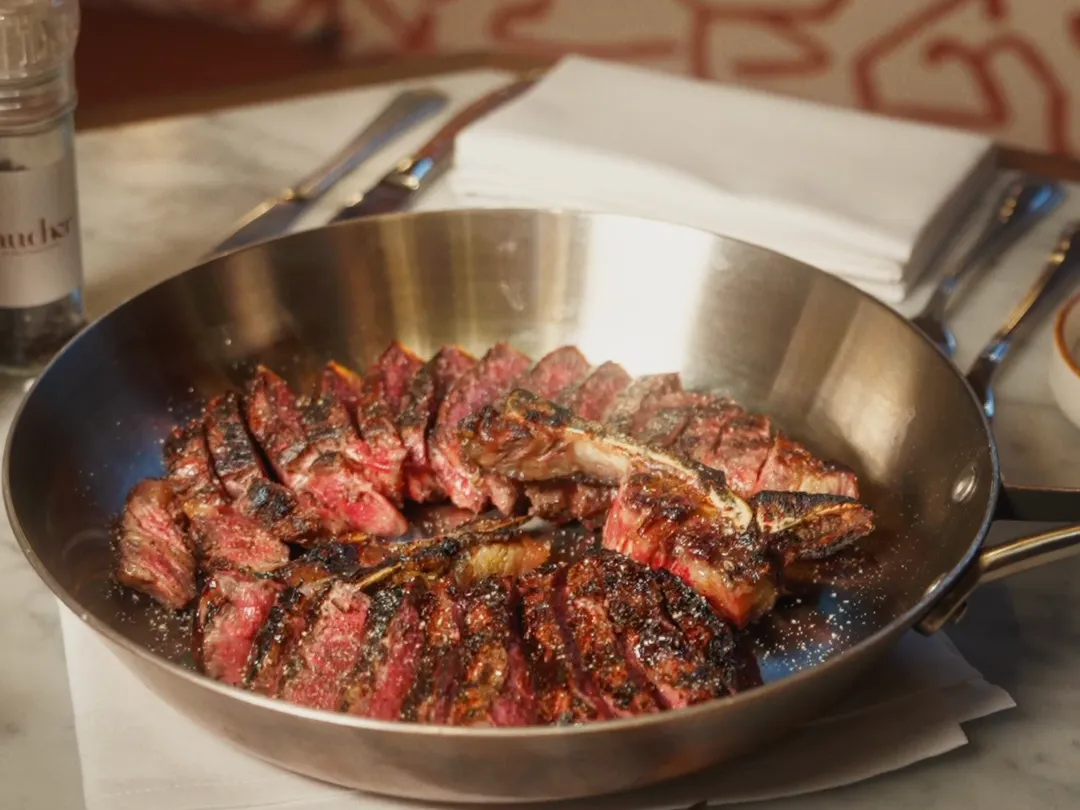
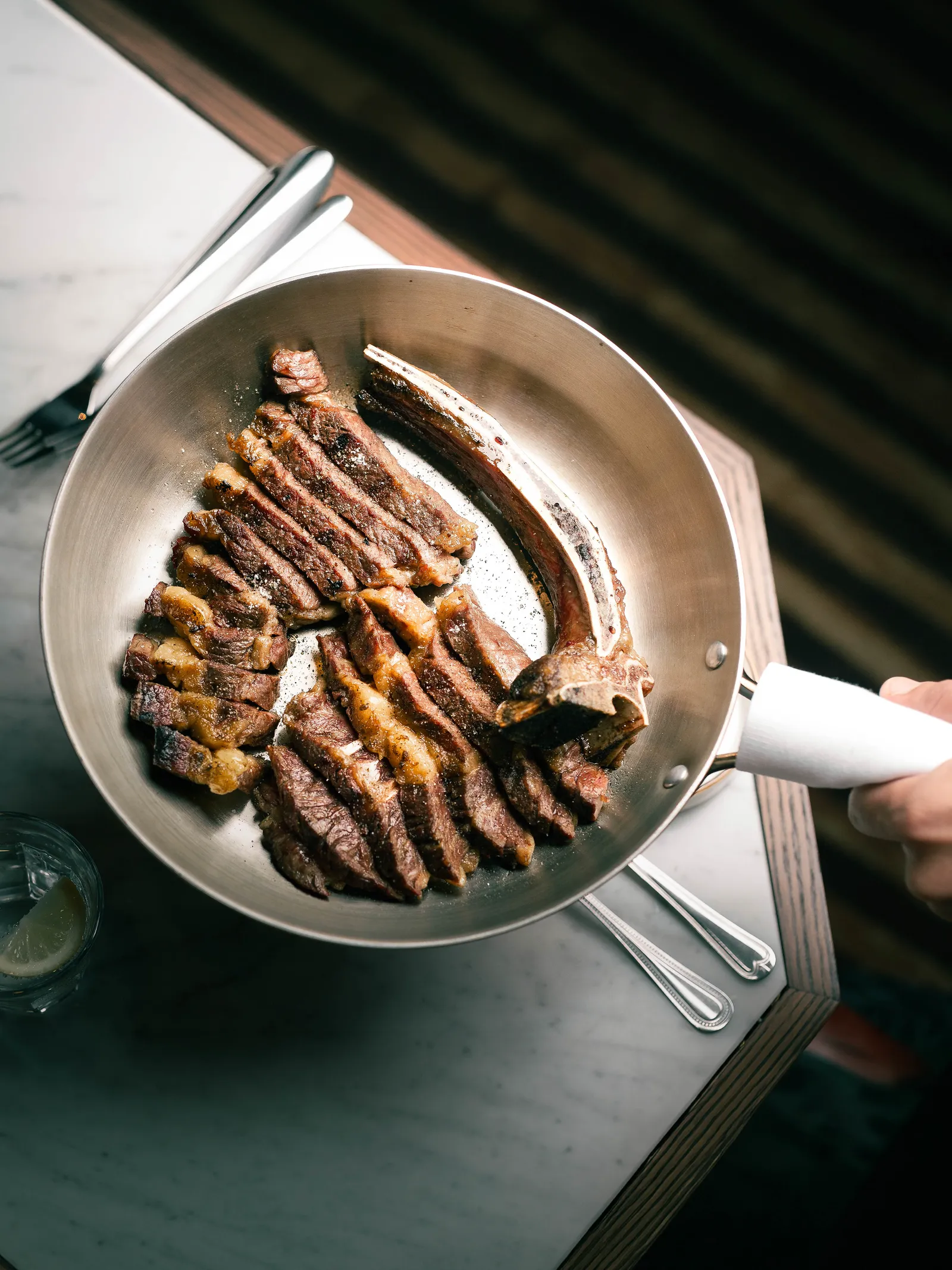
Marbling helps if you like your meat more cooked. Research from Kansas State University suggests the fat between the fibres makes up for some of the juice lost at a higher doneness (Kansas State University). The cuts on the grill here, with breed, days and price, are on the page about dry aged steak in Antwerp.
How do you know a steak is done?
With a thermometer, because the finger test isn't reliable. The Australian meat industry does give a rule of thumb: soft is rare, springy is medium and firm is well done (Australian Beef). In an Australian study with 26 home cooks, that touch test found the right doneness only 36 percent of the time (MJA, 2015).
Take the meat off the heat 3 to 6 °C before your target, because it keeps cooking while it rests (Australian Beef). VLAM and the French meat industry rest a steak for as long as it cooked (Interbev). Patience, in other words. Even when the table is already waiting, knife in hand.
How do you order your doneness at Faucher?
Just use the French word: bleu, saignant, à point or bien cuit. The steaks go on the charcoal grill in the open kitchen, over a mix of eucalyptus, black acacia, beech and oak. If you're torn between two, say so at the table. The difference between saignant and à point is a conversation that tends to last longer than the grilling.
“Ze vragen je hoe je je vlees gebakken wilt hebben en dienen het dan ook zo op.”
Questions about steak doneness
What's the difference between saignant and à point?
Saignant has a nicely red centre, at about 50 to 52 °C. À point is less red, towards pink, at about 60 °C. So à point is one step more cooked.
What is saignant in English?
Literally bleeding. It's often translated as rare, but the French scale runs a little lower than the English one.
Is bleu rarer than saignant?
Yes. A steak bleu is only seared: almost raw but warm inside, at about 47 °C.
Is a saignant steak safe?
A whole-cut steak can be red inside, because the bacteria sit on the surface. Mince must be cooked through. For pregnant women, young children, older people and people with lower resistance, well done is the safest choice.
How long should a steak rest?
According to the French and Flemish meat industry, about as long as it cooked. The Australian meat industry says 3 to 5 minutes.
Tell us how you'd like your steak
On our menu every cut of beef shows how many days it aged; the doneness is your call. Bleu, saignant, à point or bien cuit, from the charcoal grill on the Vlaamsekaai in ’t Zuid: book your table.