
What is dry aged beef?
Team Faucher · updated Friday 30 October 2026
Dry aged beef is beef that's aged unwrapped in a cold room, usually at 1 to 4 °C and 75 to 85 percent humidity. Over three to five weeks some of its moisture evaporates and the meat's own enzymes tenderise it. It ends up fuller and nuttier in flavour. The dark crust is trimmed off.
At Faucher every cut of beef ages in-house for 25 to 45 days before it goes onto the charcoal grill in our open kitchen. So what follows comes from our own ageing room, plus what researchers have published about it.
How long is dry aged beef aged?
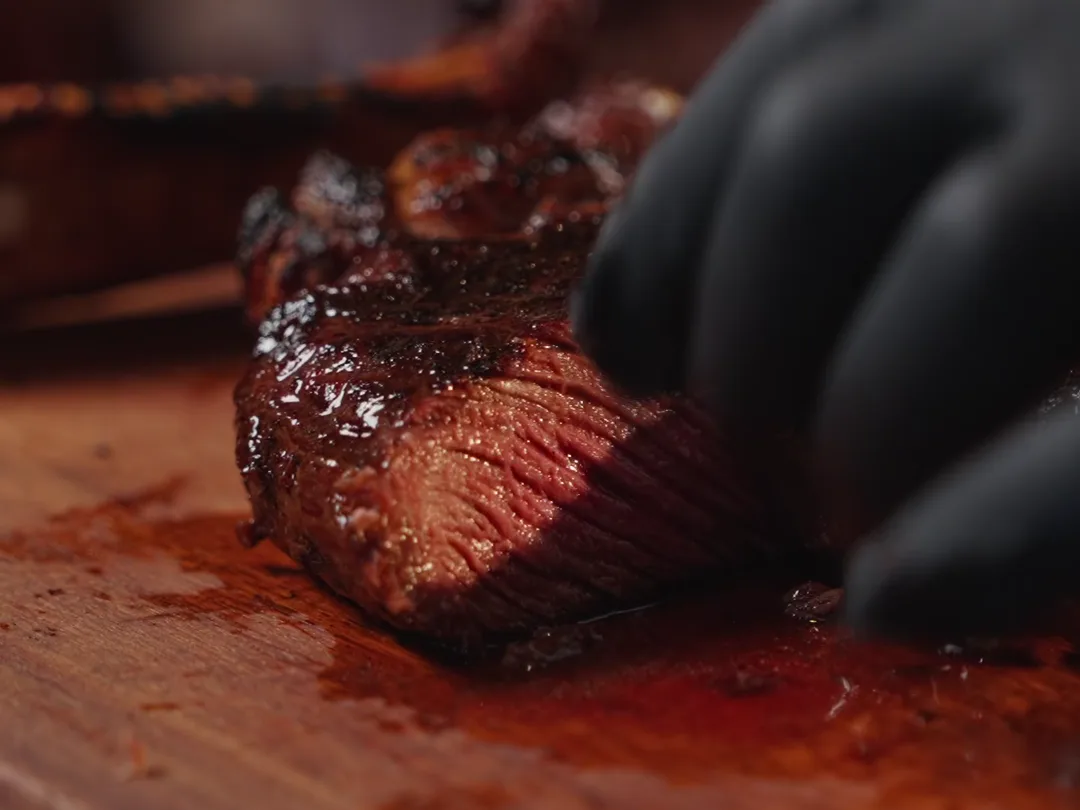
Usually three to five weeks. The European Food Safety Authority (EFSA) says 14 days is the common minimum, and that 21 days are needed for a noticeable aged flavour. Belgian companies age for three to ten weeks, according to the Belgian food safety agency (FAVV).
| Ageing | What happens in the meat | What you taste |
|---|---|---|
| Up to 7 days | The meat's enzymes work hardest and tenderise it | No aged flavour yet |
| 14 days | Most of the tenderness is there | A first roasted, aged note |
| 21 to 28 days | Moisture evaporates, flavour concentrates | Fuller, nutty, buttery |
| 35 to 45 days | More aroma compounds, more weight loss | Deep and intense, like our 45-day cuts |
What happens to beef while it ages?
Three things at once: the meat loses moisture, it gets more tender, and new flavour compounds form. The meat does it itself, through evaporation and its own enzymes, as long as temperature, humidity and airflow are right. That's a lot of work for something lying perfectly still in a cold room for three weeks. Most of us only manage that pace on a Sunday afternoon.
- Moisture evaporates. What's left tastes more concentrated. According to Texas A&M, that's one of the main reasons dry aged beef has more flavour.
- Enzymes get to work. The meat's own enzymes, calpains, break down muscle proteins. That's what makes it more tender, mostly in the first two weeks (Dashdorj et al., 2016).
- Flavour builds. Proteins and fats release small building blocks that turn into a roasted flavour on the grill later (EFSA).
- The outside becomes a crust. It's hard and dark, and it's trimmed off before the meat is cut, says the FAVV. What's on your plate is the meat underneath.
Is longer ageing always better?
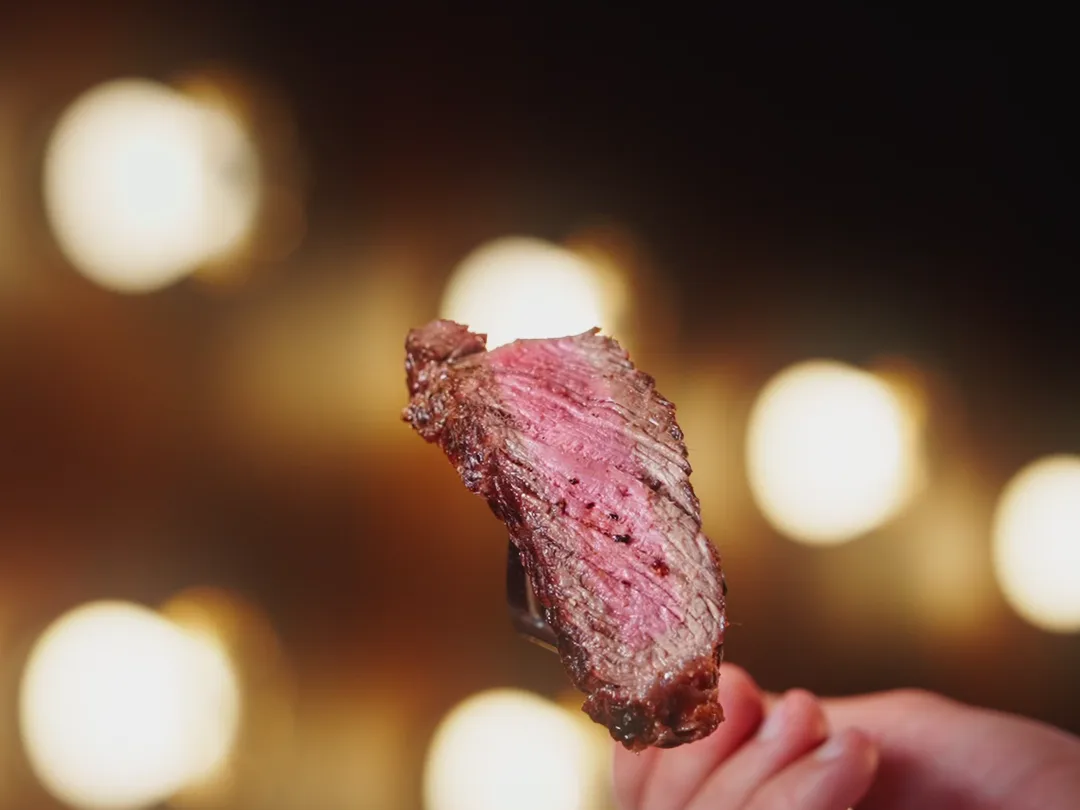
No. A Belgian research team found beef didn't get any more tender after three weeks, while oxidation kept rising up to nine weeks (Vossen et al., 2022). After about three weeks, each extra day mostly buys flavour.
And flavour's personal. A 100-day steak is a great number to tell your friends about, but it isn't necessarily a greater piece of meat to eat. We stop at 45 days. That's a choice, not a lack of patience.
Patience we've got. Most people press the lift button three times, as if the lift will then realise it's urgent. We leave a côte à l'os alone for 45 days without pressing a single button.
Dry aged vs wet aged beef: what's the difference?
Wet aged beef ages vacuum-packed in its own juices; dry aged beef ages unwrapped in cold, moving air. Since vacuum packs arrived in the 1960s, most beef has been wet aged: it's faster, cheaper and loses less (EFSA).
The difference is mostly flavour. A trained taste panel found dry aged steaks beefier and more roasted, and wet aged steaks more bloody, sour and metallic (Warren and Kastner, 1992, via Texas A&M). Metallic is rarely the word a chef hopes to hear.
On tenderness, we'll be honest: in most studies dry aged beef isn't more tender than wet aged beef. It's at least as tender, and it tastes different. We're happy to admit it, even though "more tender" would look nicer on the menu.
Dry aged ribeye and other cuts
Ribeye and striploin are the cuts most often dry aged, ideally large and with a good fat cap (Ribeiro et al., 2025). Ageing is usually done on the bone, and a thick layer of fat protects the meat from drying out (Dashdorj et al., 2016).
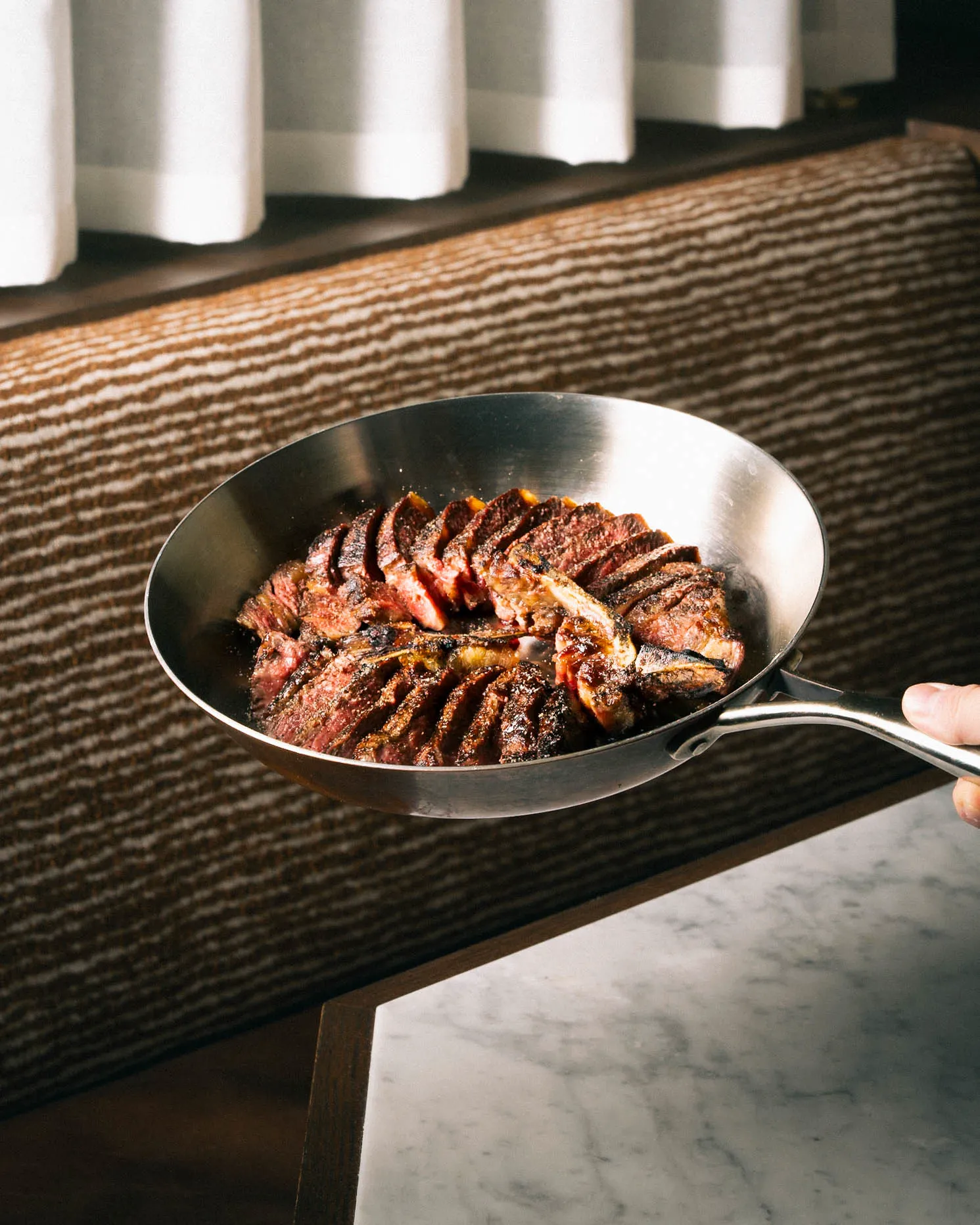
Ageing a thin, lean little steak mostly gets you an expensive piece of dried meat. That's why our large cuts on the bone age longest: côte à l'os, porterhouse and tomahawk, 45 days each.
At Faucher each cut ages for 25 to 45 days. On the menu the number of days follows the name: "45d." means 45 days of ageing in-house. All our beef, veal and lamb is 100% grass-fed.
- Filet pur Faucher Label: 25 days, 250 g, €38
- Rumsteak Black Angus: 30 days, 250 g, €25
- Côte de boeuf Simmentaler: 40 days, 950 g for two, €39 per person
- Ribeye Jersey: 45 days, 300 g, €39
- Côte à l'os, porterhouse and tomahawk: 45 days, for one or for two
“the steaks were perfectly cooked, flavorful, and high-quality”
To find the cut that suits you, see our halal steakhouse in Antwerp, with the breed, days and price of each cut.
Why is dry aged beef more expensive?
Because meat disappears along the way. In one study the usable yield of dry aged ribeye fell from 72.2 percent after 14 days to 63.5 percent after 35 days, against about 87 percent for wet aged ribeye (Laster et al., 2008, via Dashdorj et al.).
An Australian report worked out that dry aged steaks need to cost up to 19 percent more to earn the same margin (Smith et al., 2008, via CSIRO). It's the only dish that gets more expensive because the kitchen keeps its hands off it for weeks.
Why we grill dry aged beef over charcoal
Aged flavour comes through best at high heat. In one study the roasted flavour of dry aged beef was clearly stronger on the grill than in the oven (Lee et al., 2021). At 200 to 250 °C, the building blocks from ageing brown into a crust full of flavour (Ribeiro et al., 2025).
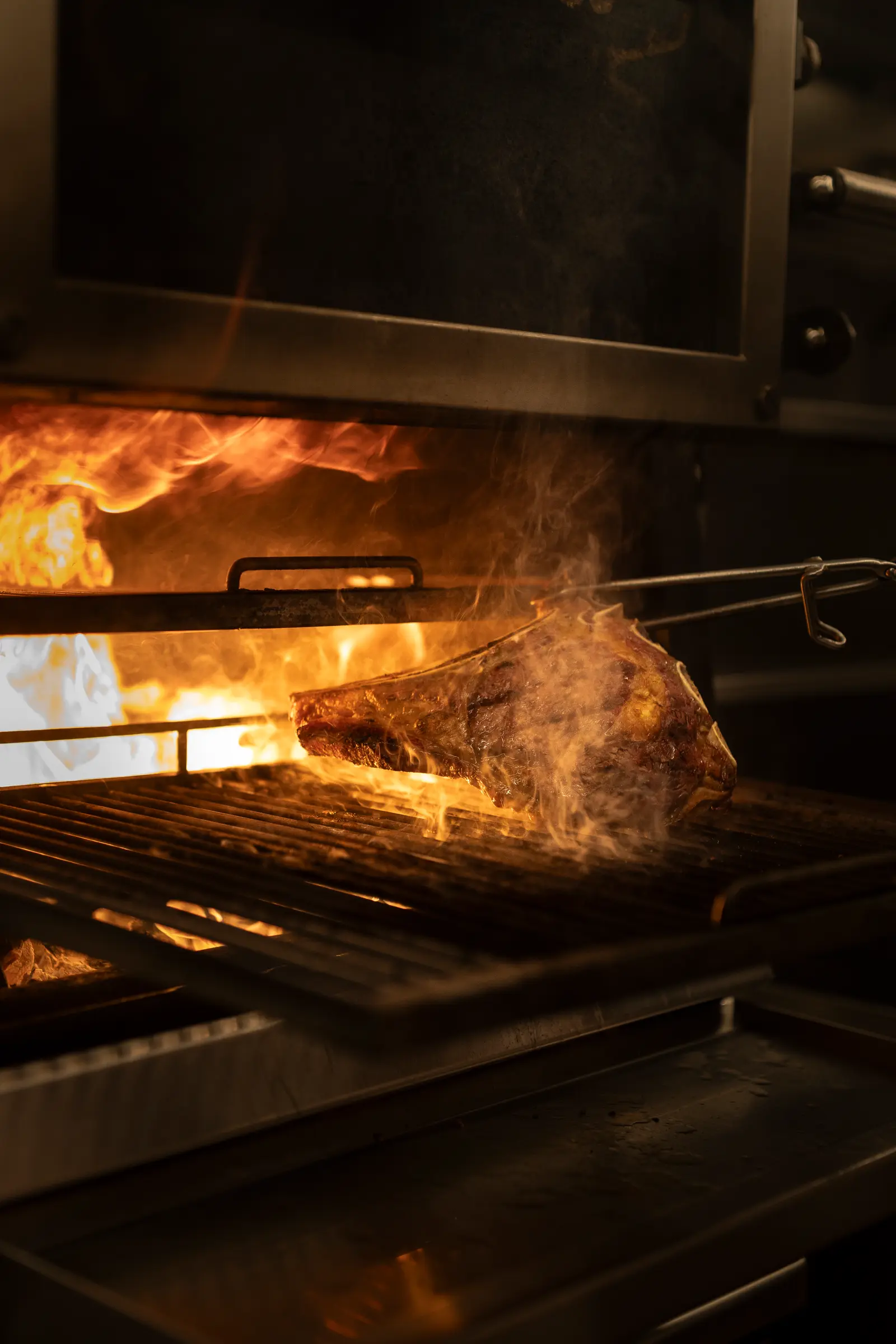
For us that's a charcoal grill in the open kitchen, burning a mix of eucalyptus, black acacia, beech and oak. After 45 days of waiting, the grilling takes only a few minutes. It's the one moment in this whole story when we're in a hurry.
“The filet pur is one of the best I've had.”
Questions about dry aged beef
Is aged beef the same as dry aged beef?
Not always. Nearly all beef rests for a while after slaughter, often 7 to 21 days, and most of it is aged vacuum-packed. Dry aged means it ages unwrapped in a cold room, usually for three to five weeks.
Is dry aged beef more tender?
Yes, thanks to the meat's own enzymes, mostly in the first two weeks. In most studies, though, it isn't more tender than wet aged beef. The big difference is flavour.
What does dry aged beef taste like?
Fuller and roasted, often described as nutty and buttery, sometimes with an umami note. Taste panels find wet aged beef more bloody and metallic.
What does 45d. mean on Faucher's menu?
The number of days the cut has aged in-house. The Jersey ribeye 45d. has aged for 45 days, the filet pur for 25.
Taste what 45 days do
We've already done the waiting. On our menu every cut shows how many days it aged, from the 25-day filet pur to the 45-day tomahawk. For more on the cuts and the grill, see our halal steakhouse in Antwerp.