
What is picanha?
Team Faucher · updated on Thursday 19 November 2026
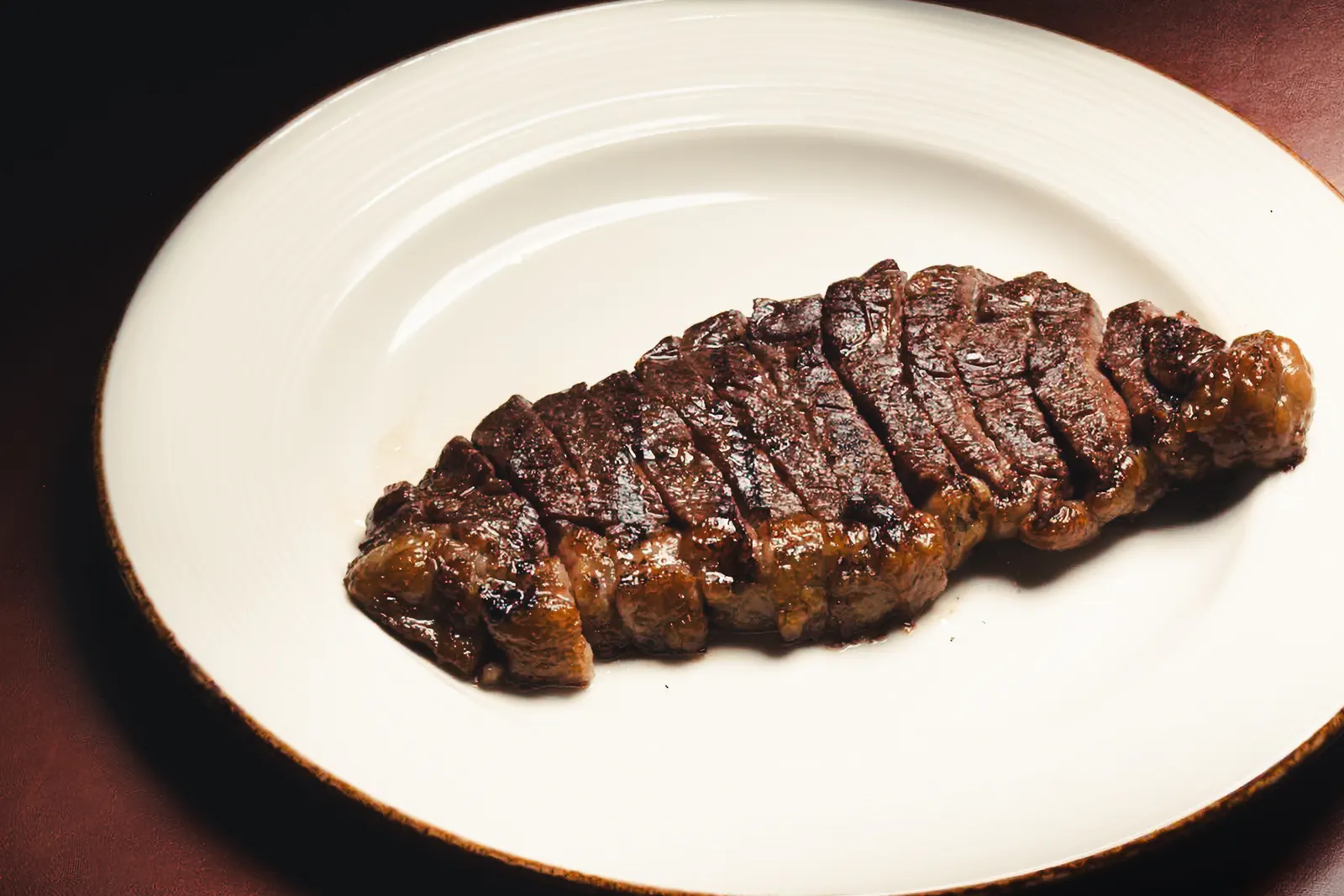
Picanha is the cap of the rump: a triangular cut of beef from the hindquarter, with a thick layer of fat on top. It's also called rump cap, top sirloin cap or coulotte. It comes from the Brazilian churrasco and is sliced across the grain, because that's when it's most tender.
At Faucher, picanha is on the menu as wagyu picanha from Margaret River, a 220 gram steak from the charcoal grill. Below is what we know about this cut. Every fact links to its source.
What cuts of picanha are there?
Two forms: the whole picanha and the picanha steak. The whole picanha is the complete triangular cut, the steak a thick slice of it. For comparison, the rump is listed too, the larger muscle the picanha sits on (AHDB).
| Cut | Weight | Cooking |
|---|---|---|
| Whole picanha | About 1.1 to 2 kilos, in the shop | Grilled or roasted in one piece, then sliced across the grain |
| Picanha steak | A slice of the whole picanha; 220 grams here | Grilled fast and hot, like any steak |
| Rump steak | 250 grams here | Grilled as a steak |
Where does picanha come from on the cow?
From the hindquarter, as a thin cap on the rump. The Australian meat standard describes rump cap as the cap muscle removed from the rump along the natural seam (AUS-MEAT). A Belgian online butcher puts it more simply: a triangular piece on the outside of the hindquarter, just under the tail, and only two per animal (butchery.be).
Every country has its own name for it. In the UK it's rump cap, in the US top sirloin cap or coulotte (AUS-MEAT). A Dutch butcher calls it the tender tip of the staartstuk, Dutch for the rump (Keurslager), and in France it's cut from the aiguillette de rumsteck (L'Hôtellerie Restauration).
The word is Portuguese. The Priberam dictionary traces it to picar, or to the Spanish picana, a cattle driver's goad (Priberam). It adds a "perhaps" to that origin, so even the dictionary keeps its options open.
What's the difference between picanha and rump steak?
Picanha is only the cap, rump steak is the rest. For picanha, the cap muscle is separated from the rump (AHDB). In a traditional rump steak the cap stays on and the meat is cut along the grain, which according to the same source makes less tender steaks.
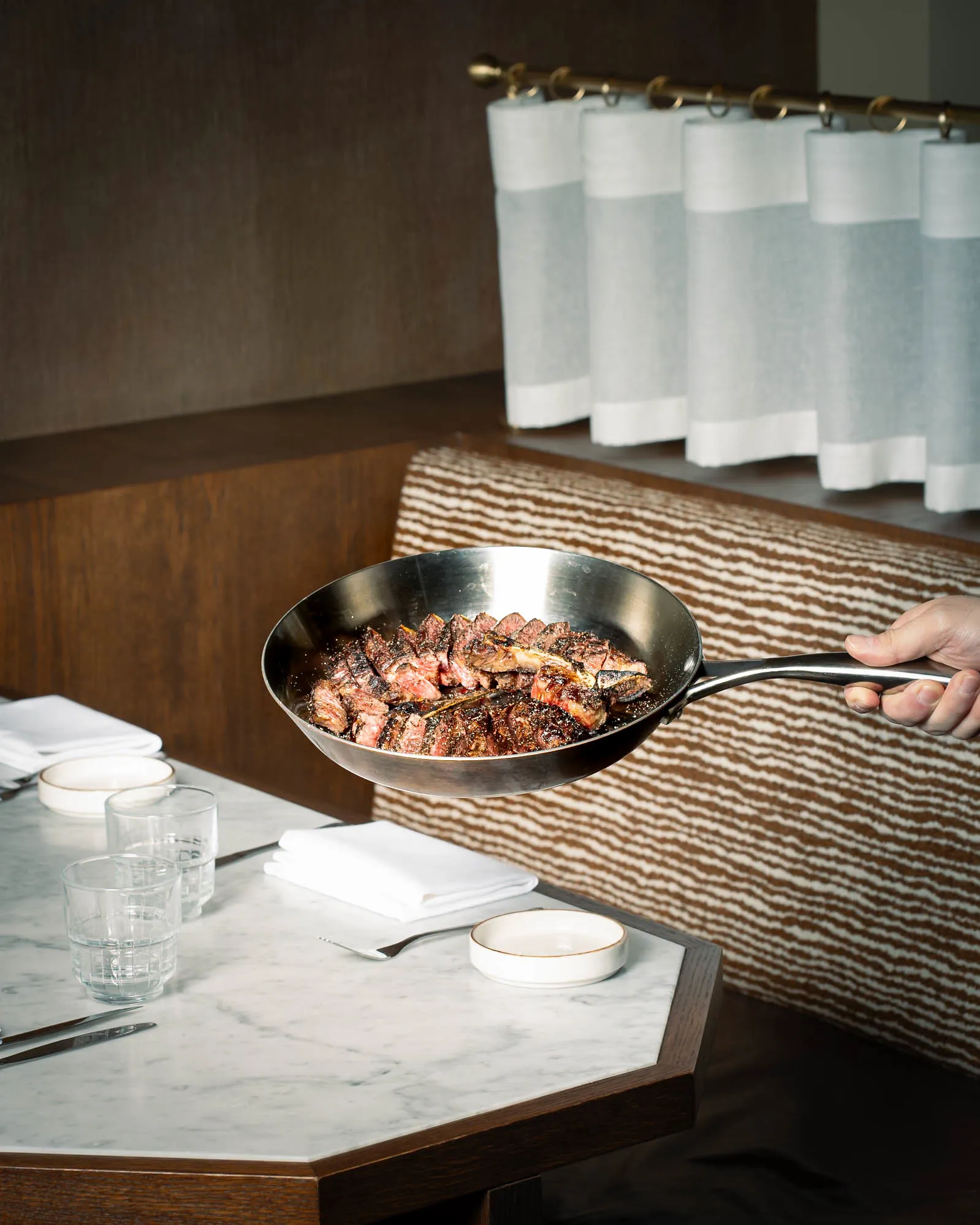
Our menu has both, in different forms. The picanha comes as wagyu, the rump as a 250 gram Black Angus steak, aged 30 days, for 25 euros. Black Angus is a breed, not a cut: it was developed in the early 19th century from the black, polled cattle of north-east Scotland (Aberdeen-Angus Cattle Society). A Black Angus picanha is simply picanha from that breed.
Why does the fat cap stay on picanha?
Because cooks and butchers swear by it. We couldn't find a study that proves it. A Belgian online butcher writes that the fat layer protects the meat from drying out while it cooks (butchery.be), and in Brazil the fat stays on until the meat is done (Wikipedia).
In the US the fat cap is trimmed more often, and a UK buying standard keeps it to 10 millimetres at most (AHDB). So the fat is a choice, not a law. It's just a choice no Brazilian thinks about for very long.
How do you slice picanha?
Always across the grain. According to the UK meat industry, a picanha steak is cut across the grain and is therefore more tender to eat (AHDB). Certified Angus Beef says the same for coulotte: cut across the grain when serving (Certified Angus Beef).
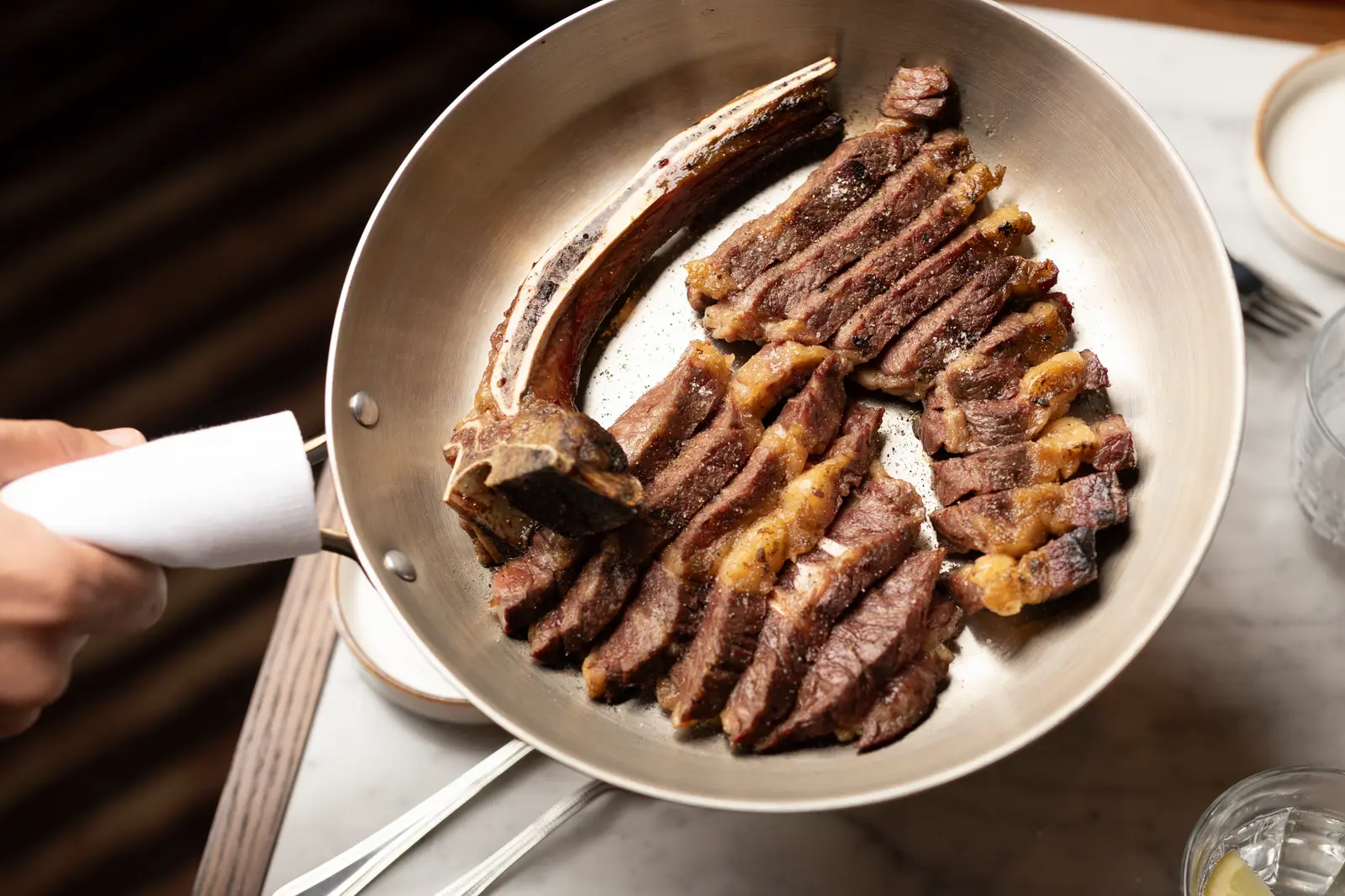
One catch: butchers say the fibres in a picanha don't run straight but fan out, so halfway through you may need to turn your knife (butchery.be). That's a butcher's experience, not a measurement. Get it wrong and you'll notice straight away. Get it right and you'll mostly notice the plate empties faster.
How do you grill picanha steak?
Fast and hot, with coarse salt, then let it rest. In a Brazilian churrasco, coarse salt is the main seasoning (Tramontina). For beef in general, the Australian industry puts medium rare at 60 to 65 °C, and a steak rests for 3 to 5 minutes (Australian Beef).
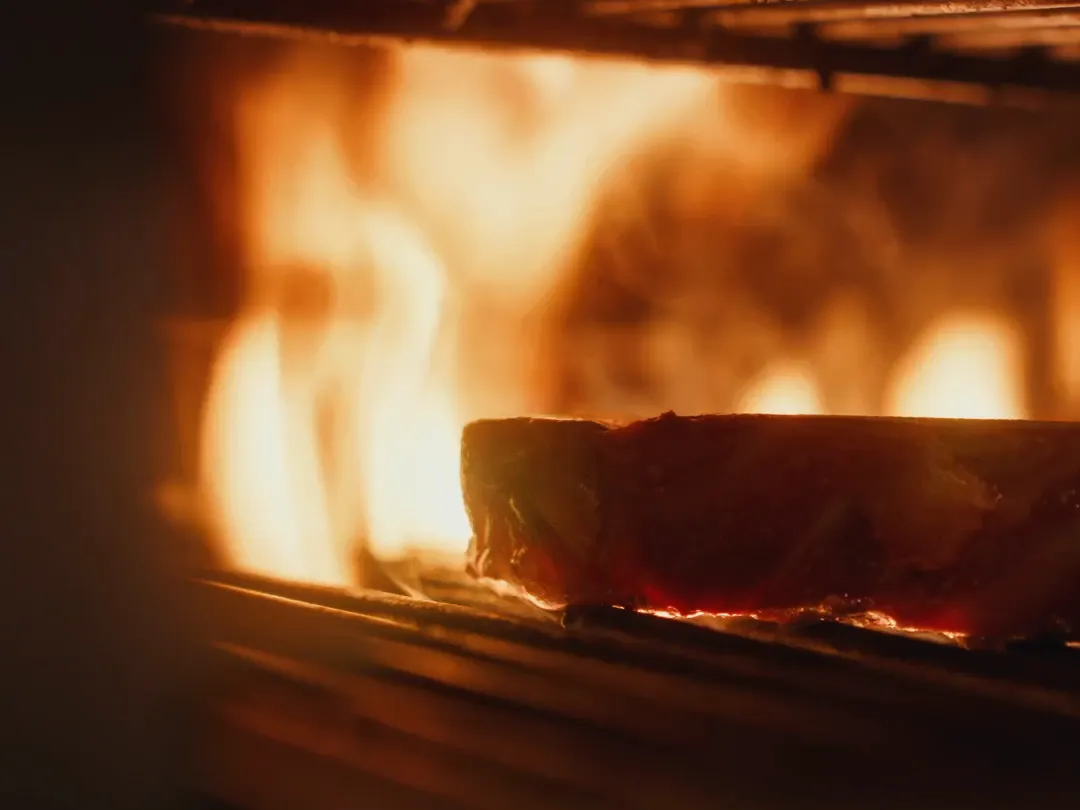
Take the meat off the heat 3 to 6 °C below that temperature, because it keeps cooking while it rests (Australian Beef). Here the picanha goes on the charcoal grill in the open kitchen, over a mix of eucalyptus, black acacia, beech and oak. At home, a good thermometer is your picanha's best friend.
Wagyu picanha at Faucher
A 220 gram steak, for 59 euros. At Faucher the picanha is Australian wagyu from Margaret River, grilled over charcoal and served with one cold sauce included. What wagyu is and why it's so marbled, you'll find on our blog.
Wagyu in Antwerp: picanha, bavette and tomahawk
“It was beyond delicious. I even ordered two times main course”
How much does picanha cost per kilo?
Regular picanha costs about 52 to 55 euros a kilo. On butchery.be we read on 19 November 2026: New Zealand Black Angus 52.17 euros, Argentinian Black Angus 54.39 euros and Blonde d'Aquitaine 52.62 euros a kilo.
The price climbs with breed and marbling: USDA Prime Black Angus was 87.25 euros, Australian wagyu with a marble score of 8 or more 139.98 euros a kilo. A picanha is only a small part of a big animal, and you'll see that at the till.
Questions about picanha
What is picanha called in English?
In the UK it's rump cap, in the US top sirloin cap or coulotte. In the Netherlands it's often called staartstuk (Dutch for the rump), and in France it's cut from the aiguillette de rumsteck.
Is picanha tender?
Yes, if you slice it across the grain. According to the UK meat industry, that makes a picanha steak more tender than a traditional rump steak, which is cut along the grain.
Should you remove the fat from picanha?
Usually not while it cooks. Cooks and butchers leave the fat cap on so the meat doesn't dry out; if you like, trim it off after grilling.
How long should picanha rest?
A picanha steak rests for about 3 to 5 minutes. A whole picanha rests longer: about 10 to 20 minutes, like a roast.
Is picanha on Faucher's menu?
Yes, as wagyu picanha from Margaret River: a 220 gram steak for 59 euros, with one cold sauce included.
Taste picanha from the charcoal grill
On our menu the picanha is a 220 gram wagyu steak from Margaret River. Taste it from the charcoal grill, on the Vlaamsekaai in ’t Zuid: book your table.