
What is wagyu beef?
Team Faucher · updated on Wednesday 11 November 2026
Wagyu is the name for four Japanese cattle breeds, and over 90 percent of them are Japanese Black. The meat stands out for its marbling: fine streaks of fat inside the muscle itself. That fat melts at a low temperature, so wagyu tastes soft and rich. Outside Japan, Australia has the largest herd.
At Faucher the menu has Australian wagyu from Margaret River, as picanha, bavette and tomahawk, grilled over charcoal in the open kitchen. Below is what we know about wagyu. Every fact links to its source.
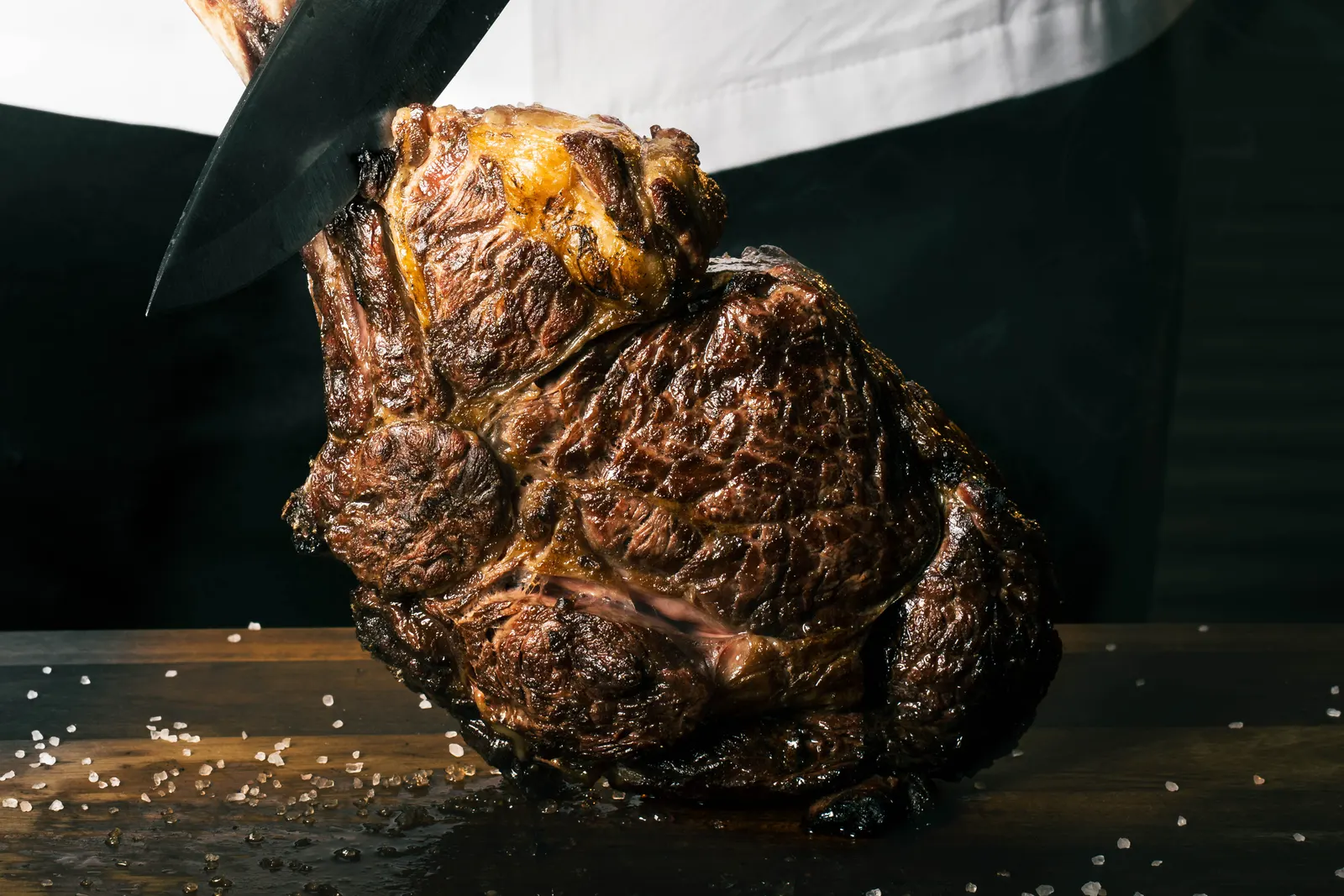
What types of wagyu are there?
Four types, sorted by bloodline. The Australian Wagyu Association looks at how much of an animal traces back to the Japanese foundation cattle (AWA). Japan itself has four wagyu breeds, and over 90 percent are Japanese Black (JETRO).
| Type | What it means | Share of wagyu |
|---|---|---|
| Fullblood | Traces back entirely to the Japanese foundation cattle | All of it |
| Purebred | Nearly pure after four or more generations of crossing | About 94 percent or more |
| F2 and F3 | Crosses bred back to wagyu again | 75 to 94 percent |
| F1 | Usually a fullblood wagyu bull with an Angus cow | 50 to 75 percent |
Why is wagyu so marbled?
Because it started out as a draught animal. In Japan wagyu were bred for endurance, which led to fat stored inside the muscle itself: the marbling (AWA). From plough animal to luxury product. Not every career change goes this well.
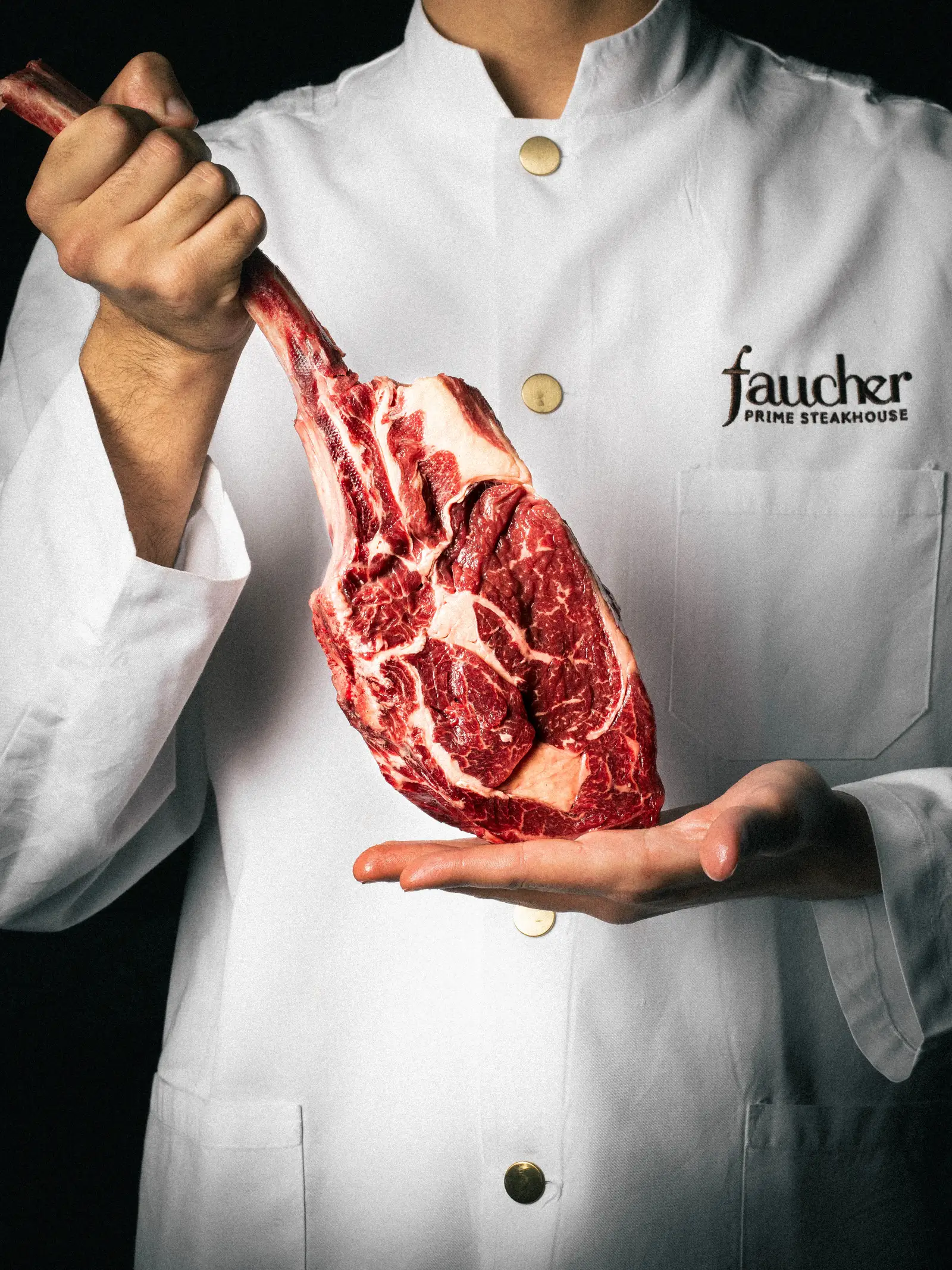
That fat isn't like ordinary beef fat. It's mostly monounsaturated and melts at a low temperature, so it spreads through the meat as it cooks (AWA). Fat from Japanese Black cattle raised in Japan melted from 24 °C in measurements (Smith, 2016). That's well below your body temperature, so it starts melting before you've swallowed.
What do A5 and BMS mean for wagyu?
A5 is the top grade on the Japanese scale. The Japan Meat Grading Association gives every carcass a letter for yield, A, B or C, and a number from 1 to 5 for quality (JMGA). That number weighs four things: marbling, the colour and shine of the meat, firmness and texture, and the fat. The lowest of the four counts, so beautiful marbling won't rescue a pale piece of meat.
The marbling itself gets a BMS score from 1 to 12, and quality 5 needs BMS 8 to 12 (JMGA). Australia has its own marble score, from 0 to 9+. Australian fullblood wagyu averages around 8 on it (AWA).
So an A5 grade belongs to Japanese beef. Our menu has Australian wagyu without a Japanese grade. We don't make a secret of it.
What's the difference between wagyu and Kobe?
All Kobe is wagyu, but not all wagyu is Kobe. Kobe beef comes from Tajima cattle, a black wagyu line, born and fattened in Hyogo Prefecture (Kobe Beef Association, AWA). On top of that come strict rules: only heifers or steers, a quality grade of at least 4 and a BMS of at least 6.
The name is protected in the European Union as a geographical indication (MAFF). So it isn't a word you put on a menu lightly, however good it sounds. Kobe isn't on our menu.
Australian wagyu: how does it differ from Japanese?
It's close to Japanese wagyu, but not identical. Australian wagyu is raised in Australia, mostly from Japanese genetics. The first purebred animal arrived in 1990, and 221 fullblood cattle left Japan between 1990 and 1997 (AWA). About 95 percent of Australian wagyu uses Japanese Black genetics.
Today Australia has the largest wagyu herd outside Japan, with more than 100,000 registered fullblood cows (AWA). The difference is in the details. A Japanese study found slightly more oleic acid in Japanese Black than in Australian wagyu, and intermuscular fat that melted 4 °C lower (Obana et al., 2025).
Our wagyu comes from Margaret River in Western Australia, about a 280 kilometre drive south of Perth (Tourism Australia). That's a long way for a steak. The beef makes the journey, you only do the last bit to the Vlaamsekaai.
Wagyu picanha, bavette and tomahawk at Faucher
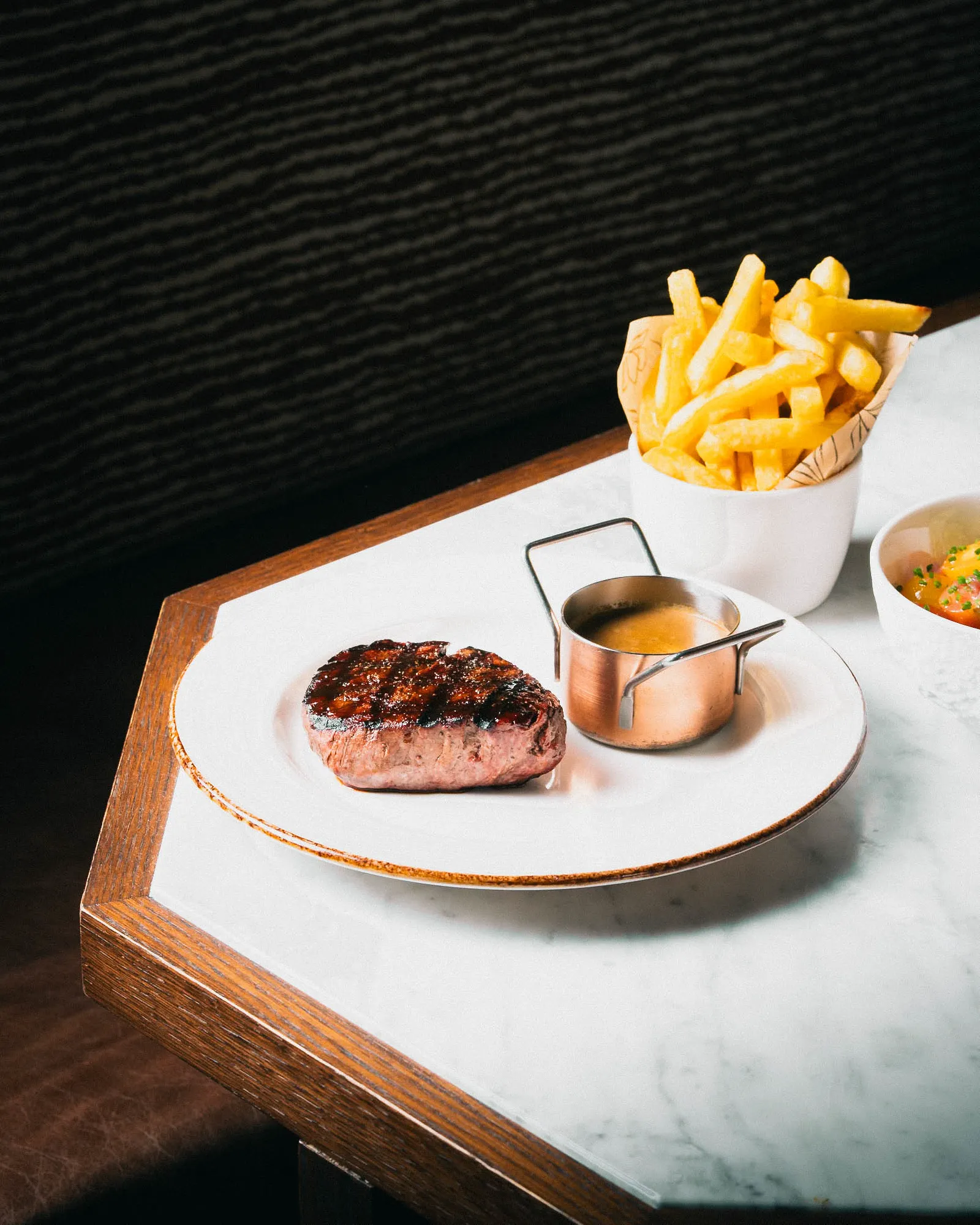
Three cuts: picanha, bavette and a tomahawk for two. At Faucher it's Australian wagyu from Margaret River. Our menu describes it like this, in Dutch: “Vol van smaak, hoogste marmering en botermals speciale selectie voor Faucher.” Modesty has never been a menu's strong point.
Which three cuts we serve and what they cost is on our page about wagyu in Antwerp.
“The quality of the food and the service are incredible! Nothing is left to chance! I recommend it 100%”
How much does wagyu cost per kilo?
About 125 to 180 euros a kilo for Australian wagyu. That's what we read on 11 November 2026 at the Belgian online shop butchery.be: picanha 139.98 euros, bavette 125.20 euros and tomahawk 177.38 euros a kilo, for Australian wagyu with a marble score of 8 or more. Japanese A5 entrecôte was 263.11 euros a kilo.
One reason: wagyu is fed for a long time, and a feeding period of 350 to 600 days is common (AWA). That's a lot of meals for one cow, and she doesn't pay for any of them. With us, a 220 gram wagyu picanha costs 59 euros, grilled and served with a cold sauce.
How do you grill wagyu?
Fast and hot, like any good steak. We couldn't find an official wagyu rule from a meat body. For beef in general, the Australian industry advises taking the meat off the heat 3 to 6 °C before your target core temperature and resting a steak for 3 to 5 minutes (Australian Beef).
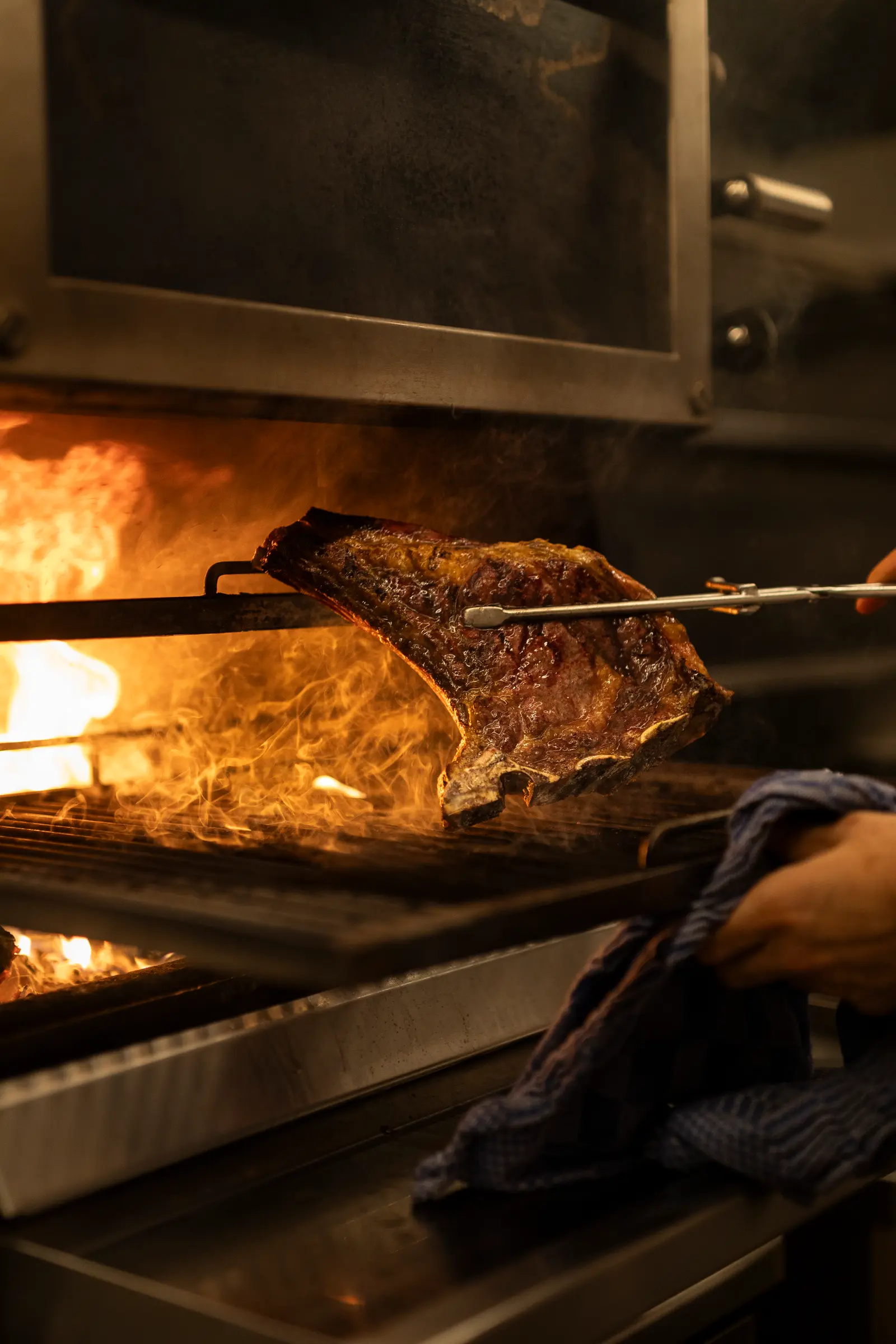
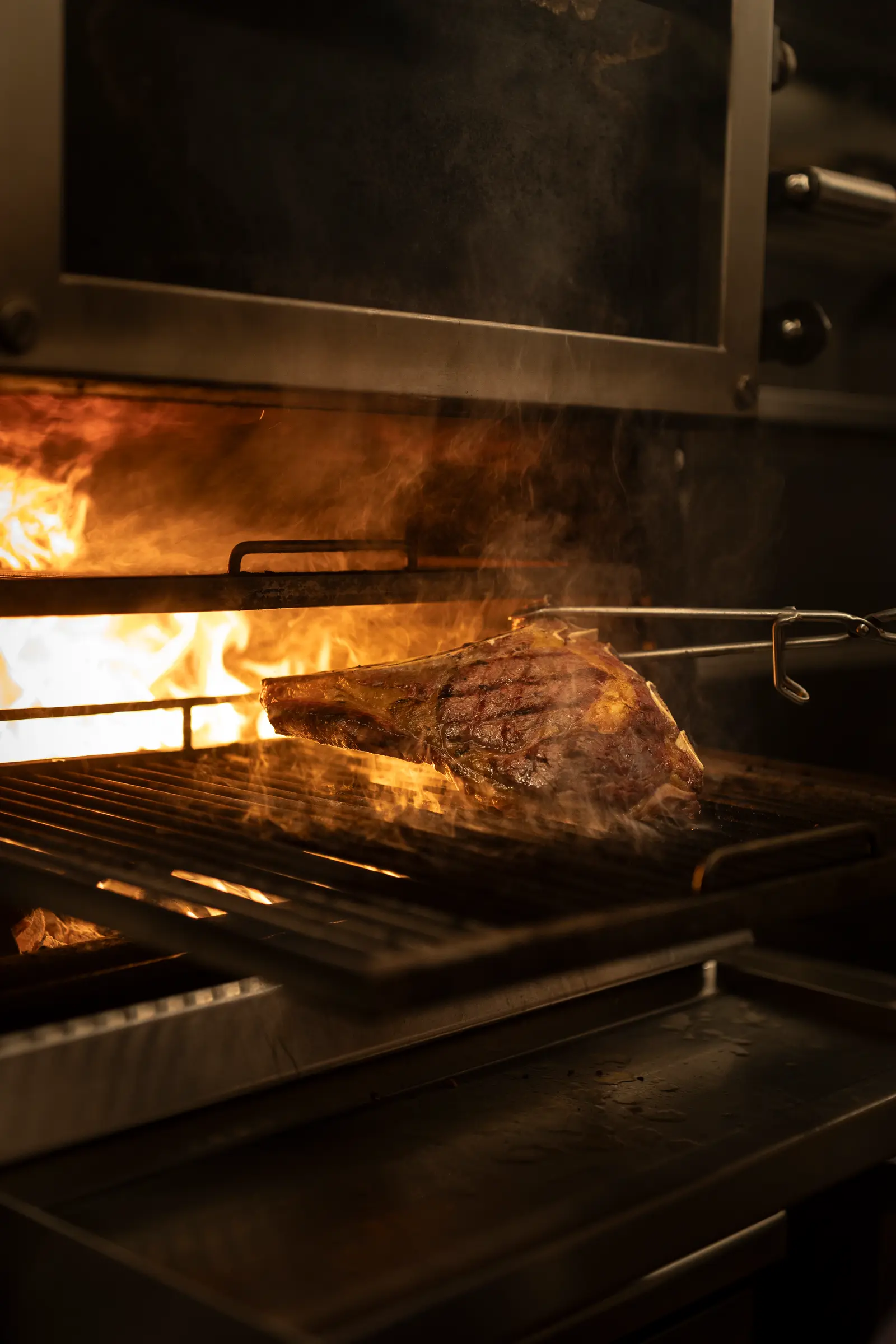
Medium rare sits at 60 to 65 °C, according to the same source. Here the wagyu goes on the charcoal grill in the open kitchen, over a mix of eucalyptus, black acacia, beech and oak. You probably don't have that wood at home. A good thermometer will do more for you than an expensive grill rack.
Questions about wagyu
What does the word wagyu mean?
Literally Japanese cattle: wa means Japanese, gyu means cattle. It's the name for four Japanese cattle breeds, and Japanese Black is by far the largest.
Is wagyu the same as Kobe?
No. Kobe is wagyu from Tajima cattle in Hyogo Prefecture, with strict rules on quality and marbling. All Kobe is wagyu, but most wagyu isn't Kobe.
What is A5 wagyu?
Japanese wagyu with yield letter A and the top quality grade, 5. A 5 needs marbling of BMS 8 to 12.
What is F1 wagyu?
A cross, usually a fullblood wagyu bull with an Angus cow. The meat is 50 to 75 percent wagyu.
Which wagyu is on Faucher's menu?
Australian wagyu from Margaret River, in Western Australia. You order it as picanha, as bavette or as a tomahawk to share between two.
Taste wagyu from the charcoal grill
On our menu the Margaret River wagyu comes as picanha, bavette and tomahawk for two. Taste it from the charcoal grill, on the Vlaamsekaai in ’t Zuid: book your table.